How a Landscaper and Landscape Design in Wellesley, MA, Improves Outdoor Living Layout and Flow

Outdoor living spaces feel better when they are planned with intention, not assembled one feature at a time. If your backyard feels disconnected or hard to use, the issue is often layout and flow. A landscaper and landscape design in Wellesley, MA, helps create a cohesive outdoor environment by defining routes, gathering areas, and the way plantings and structural elements work together. Our team handles every design and build decision so your outdoor space feels natural, comfortable, and easy to enjoy from day to night.
Related: How Landscape Design and Retaining Walls Create Cohesive Wellesley, MA, Backyards
What Outdoor Living Layout and Flow Really Mean
Layout is the arrangement of your outdoor zones. Flow is how you move between those zones. When both are planned correctly, your backyard feels intuitive. You step outside, and the space makes sense. You know where people gather, where furniture belongs, and how to move around the space without cutting through seating areas or stepping carefully around corners.
Many homeowners assume the solution is adding more features. In reality, the most common issue is that existing features are not connected in a meaningful way. A patio might be the right size, but placed in a location that feels detached. A walkway might be missing or too narrow to guide movement. Planting beds may be full but arranged without structure, which can make the backyard feel busy or uneven.
Our approach is to solve layout and flow first. Once the backbone of the backyard is planned, everything else can be designed to support comfort, usability, and a refined look.
Start With How You Want to Use Your Backyard
The best landscape design begins with how you actually want to live outside. That includes how you move through the space, what activities matter most, and what kind of gatherings you host. Some homeowners want a backyard designed for entertaining, with a dining zone, lounge seating, and a fire feature. Others want a quieter space for daily routines, with comfortable seating, refined plantings, and a more private feel.
We begin by learning what is missing from your current layout. We consider how you enter the backyard, where you naturally walk, and where the space currently feels awkward. These insights guide decisions about patio placement, walkway routes, and where plantings should be installed for privacy and balance.
When your outdoor space is designed around real use, it feels natural because every element supports how you live.
Use the Home as the Anchor for Outdoor Layout
Your home is the anchor point of your outdoor living layout. The backyard should feel like an extension of the home, not a separate area that happens to be outside. That means patios, walkways, and gathering zones should connect to the home in a way that feels balanced and intentional.
We evaluate your primary access points, such as patio doors, decks, and steps. We also consider what you see from inside, especially through the main living room windows or kitchen doors. Outdoor spaces visible from inside need to look cohesive from that perspective. The layout should feel aligned with the home’s lines and architectural style.
This is one of the most important reasons professional landscape design improves flow. When the home and backyard are planned together, movement feels easier, and the outdoor space feels like it belongs.
Create Defined Outdoor Zones That Support Comfort
Outdoor zones are areas with a purpose. A dining zone supports meals outside. A lounge zone supports conversation and relaxation. A fire feature zone supports gathering after sunset. When zones are not defined, furniture placement feels random, and movement becomes awkward.
We define zones using patio shape, walkways, planting beds, and structural elements. Even subtle design decisions can create stronger zones. A shift in patio direction can separate dining from lounging. A seating wall can define the perimeter of a gathering space. A planting bed can create a natural edge between a route and a seating area.
Defined zones help your backyard feel organized. They also help you use the space more often because each area feels comfortable and purposeful.
Plan Walkways That Guide Movement Naturally
Walkways are essential for flow because they guide movement through the backyard. Without a walkway, people tend to cut across turf or step through planting beds to reach seating areas, a gate, or an outdoor kitchen. Over time, that creates worn routes and an outdoor space that feels unstructured.
We design walkways to connect the routes you use most. That might include the path from the back door to the patio, the patio to a side gate, the patio to a fire pit, or the patio to an inground pool deck. Walkways should be comfortable underfoot, wide enough for natural movement, and positioned where people naturally want to walk.
Walkways built with pavers or natural stone also support a refined look and help connect structural elements throughout the backyard.
Use Patios to Anchor the Outdoor Living Experience
A patio is often the main gathering space in a backyard, and it sets the tone for the entire layout. When the patio is placed correctly and sized appropriately, it becomes the natural anchor point for outdoor living.
We plan patios based on how you want to use them. A dining zone needs room for a table, chairs, and comfortable circulation. A lounge zone needs space for seating that is arranged for conversation, not pushed to the edges. If the patio will support an outdoor kitchen, we plan appliance placement and serving space as part of the layout so everything feels cohesive.
We also consider how the patio connects to planting beds and walkways. A patio should not feel like a standalone feature. It should transition naturally into the surrounding landscape.
Use Plantings to Create Structure and Privacy
Plantings play a major role in layout and flow, shaping how outdoor spaces feel. The right plantings add structure, define edges, and create privacy where it matters. Plantings can soften the perimeter of patios, create separation between neighbors, and frame walkways so routes feel intentional.
We install plantings to support balance. Too few plantings can make a backyard feel exposed and unfinished. Too many plantings without structure can make the space feel cluttered. Our team selects plantings based on how they will mature, how they fit the scale of your home, and what works best in your regional hardiness zone.
We also include planting beds as part of the layout. Planting beds are not filler. They are design tools that help define outdoor rooms and improve flow.
Incorporate Outdoor Lighting to Support Evening Use
Outdoor lighting changes how you use your backyard after sunset. Without outdoor lighting, walkways and steps can feel unclear, and gathering areas can feel disconnected. With outdoor lighting installation, your backyard stays comfortable and welcoming even in the evening.
We plan outdoor lighting to support visibility and atmosphere. That includes lighting along walkways, near steps, and around seating zones. Outdoor lighting can also highlight plantings and structural elements, which helps the backyard feel more layered and refined at night.
Outdoor lighting supports flow by helping define routes and zones. When key areas are softly lit, movement feels easier, and the outdoor space feels more complete.
Use Structural Elements to Define Space Without Overcrowding
Structural elements help define outdoor rooms and create a stronger layout. The key is using them strategically. Too many structural elements can make the backyard feel crowded. Too few can make it feel undefined.
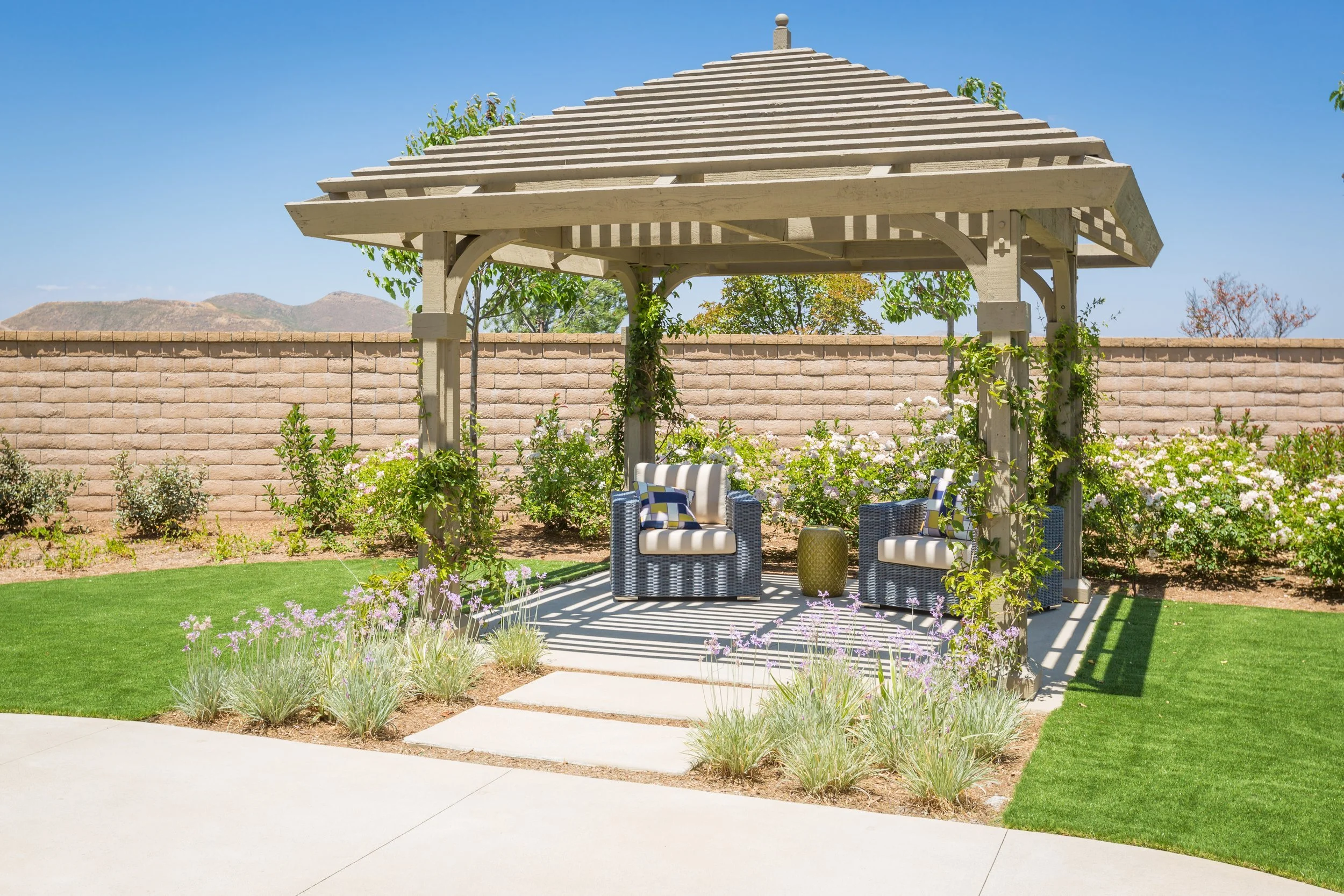
We incorporate elements such as seating walls, retaining walls, steps, pergolas, and fire features when they support how the space functions. A seating wall can provide extra seating and define the edge of a patio. A pergola can define a lounge zone and create an overhead structure. A retaining wall can help create a level area in a sloped backyard and improve usability.
These features are planned as part of the layout so they feel integrated, not added later.
Balance Open Space With Defined Gathering Areas
A backyard works best when there is a balance between open space and defined zones. Open space gives the backyard breathing room and keeps the layout from feeling crowded. Defined zones provide comfort and purpose.
We plan layouts that include both. Open areas support movement and allow the backyard to feel spacious. Defined gathering areas support hosting, relaxation, and everyday use. This balance is one of the biggest factors in whether a backyard feels natural.
When open space is planned intentionally, it also supports flexibility. You can host a larger group without feeling tight, or enjoy quiet time without the backyard feeling empty.
What Are The Advantages Of A Retaining Wall?
A retaining wall improves outdoor living layout and flow by creating usable space where grade changes would otherwise limit how you use your backyard. If your property slopes, a retaining wall helps establish level zones for patios, seating areas, and walkways, making the backyard feel more comfortable and easier to navigate. Retaining walls also help define outdoor rooms by creating clear edges and transitions between spaces. They can add built-in structure for planting beds, frame patio borders, and support a more organized layout that feels intentional. Our team handles design, material selection, and construction so the retaining wall fits naturally into the overall landscape design.
How Long Will A Paver Patio Last?
A professionally built paver patio is designed to last for decades, and in many cases, it can last 30 years or longer when the base, grading, and drainage are handled correctly. Pavers are a long-lasting choice because individual units can be set on a properly compacted base that supports stability, and they allow for slight movement without cracking like poured surfaces can. The most important factor is the construction beneath the pavers. Our team manages excavation depth, base preparation, edge restraint, and drainage planning so your patio stays stable, comfortable, and consistent over time.
How Our Team Handles Design and Build Decisions for You
Homeowners should not have to guess where a patio should go, how walkways should connect, or how plantings should be arranged for privacy. These decisions are what make landscape design so valuable when it is done professionally.
Our team manages the entire process. We evaluate your property, understand your goals, and create a plan to improve layout and flow. We handle decisions about placement, materials, grading, and construction details. We coordinate installation so that patios, walkways, plantings, outdoor lighting, and structural elements all align with the design plan.
The result is an outdoor living environment that feels natural and easy to use. You move through the backyard without awkward routes, gathering spaces feel comfortable, and the entire layout feels cohesive with your home.
Related: 10 Ways Plantings & A Professional Landscaper Can Refresh Your Wellesley, MA, Backyard