Masonry Inside and Out: How Stone Transforms a New England Property in Milford, NH
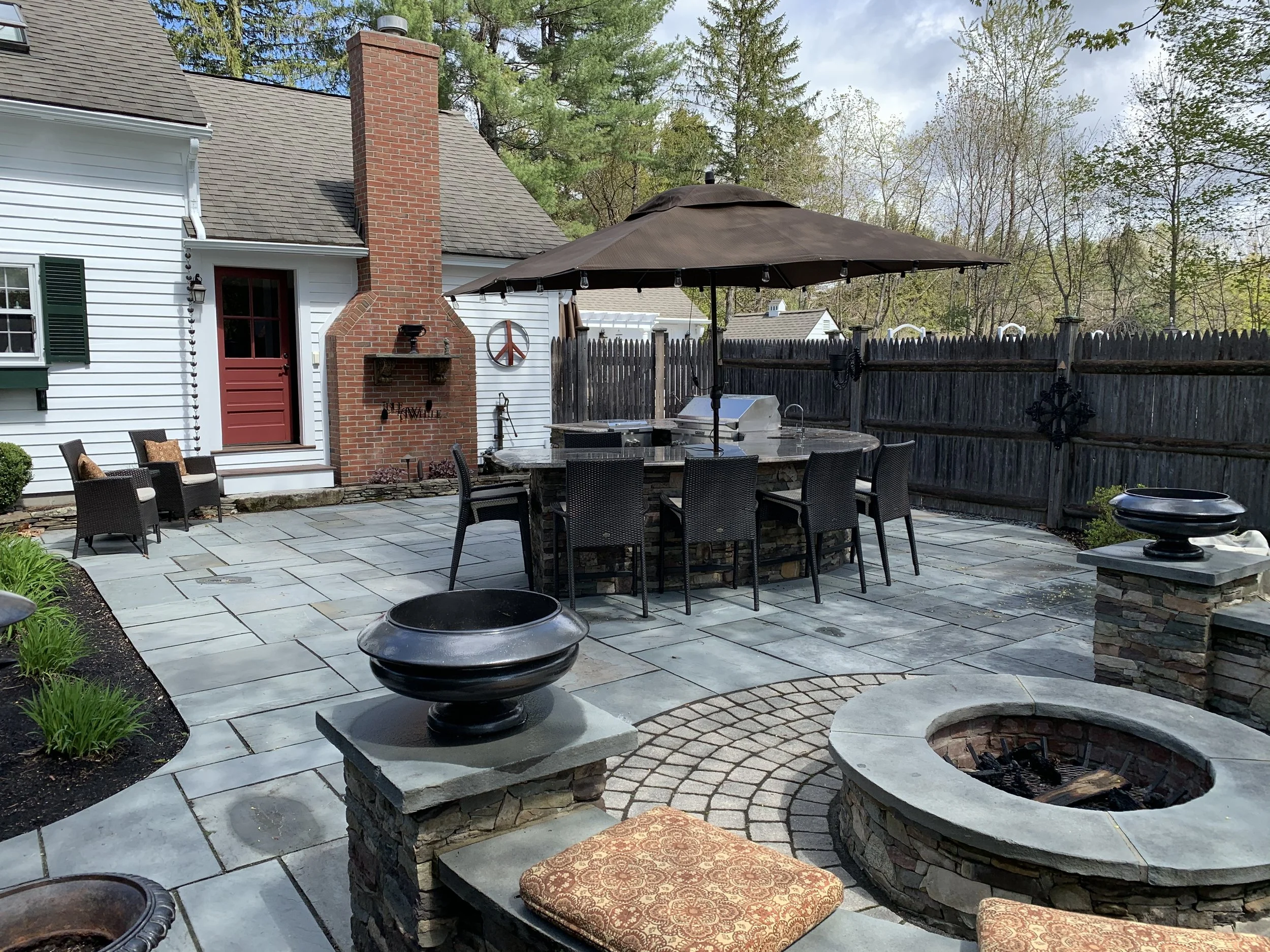
There is a reason stone has been part of New England architecture for centuries. It belongs here. It looks like it grew out of the ground alongside the birches and the granite ledge. It weathers the same storms, endures the same freeze-thaw cycles, and develops the same kind of character over time that makes old New England homes feel permanent in a way that newer materials rarely do.
Masonry carries that same energy, whether it is applied to the exterior of a home, built into the landscape, or installed inside as a fireplace surround or accent wall. It is one of the few materials that can move seamlessly between indoor and outdoor applications without losing its identity. A stone veneer on the living room fireplace can echo the natural stone retaining wall in the backyard. A brick kitchen backsplash can connect visually to the brick accents on the front walkway. When the same material language runs through the entire property, the result is a home that feels cohesive, grounded, and intentional.
For homeowners in Milford, NH, and across southern New Hampshire, where the landscape itself is defined by stone, incorporating masonry into both the interior and exterior of the home is not a stretch. It is a natural extension of the environment.
What Masonry Actually Means in a Residential Context
The word masonry covers a lot of ground. In the broadest sense, it refers to any construction that uses stone, brick, concrete block, or similar materials bonded with mortar. In a residential context, it typically refers to stone veneer installations, brick work, fireplace construction, accent walls, retaining walls, outdoor kitchen facades, and the structural or decorative use of natural or manufactured stone on both the interior and exterior of the home.
What makes masonry distinct from other building methods is its permanence. A well-built stone wall does not peel, fade, warp, or rot. It does not need to be repainted every few years. It does not expand and contract the way wood siding does. It sits there, quietly doing its job, looking better with each passing decade as the surface develops the kind of patina that only time and weather can produce.
That permanence is especially valuable in New Hampshire, where the climate tests every material on every surface of the home. Summers bring humidity and UV exposure. Winters deliver sustained cold, heavy snow, ice, and the relentless freeze-thaw cycle that cracks concrete, splits wood, and degrades anything that was not built to handle it. Masonry, when installed correctly with the right materials and proper mortar joints, handles all of it.
The Exterior: Where Stone Meets the Landscape
On the outside of the home, masonry serves both structural and aesthetic purposes. It holds back earth. It frames entryways. It defines outdoor living spaces. And it connects the built environment to the natural landscape in a way that vinyl, composite, and engineered materials cannot replicate.
Retaining walls built from natural stone or engineered block create usable space on sloped properties while adding visual weight and texture to the landscape. Seating walls around fire pits and patios provide both function and form, giving guests a place to sit while anchoring the outdoor room with a material that feels permanent and deliberate.
Outdoor kitchen facades clad in stone veneer turn a grill and countertop into something that looks like it was always part of the property. Fireplace surrounds on covered patios or pavilions bring the warmth and presence of interior masonry into the open air. Columns, pillars, and accent walls on entryways and porches set the tone for the entire home before anyone steps inside.
In southern New Hampshire, where properties often border woods, sit on granite ledges, or look out over rolling terrain, exterior masonry ties the home to its surroundings in a way that feels earned rather than imposed. The stone on the wall came from the same geological history as the stone in the ground. That connection is subtle but real, and it is one of the reasons masonry looks so natural in this part of the country.
The Interior: Bringing Stone Inside the Home
Interior masonry is where the material shifts from structural to experiential. Inside the home, stone and brick are not holding back earth or resisting lateral pressure. They are creating atmosphere. They are adding warmth, texture, and visual depth to rooms that would otherwise rely entirely on paint, drywall, and trim for their character.
The fireplace is the most common interior masonry application, and for good reason. A stone or brick fireplace is the focal point of the room it occupies. It draws the eye, anchors the furniture arrangement, and creates a gathering point that no other feature in the home can replicate. In New England, where fireplaces are not just decorative but functional for much of the year, the material surrounding the firebox matters. It needs to handle heat, resist cracking, and look good doing both for decades.
Natural stone veneer on a fireplace surround creates a rugged, textured surface that feels like it was quarried from the hillside behind the house. Granite, limestone, and fieldstone all work in this application, each bringing a different color palette, texture, and scale to the wall. The choice depends on the style of the room, the height of the ceiling, and whether the homeowner wants the fireplace to feel massive and dramatic or clean and understated.
Manufactured stone veneer offers a lighter-weight alternative with a wider range of color and profile options. High-quality manufactured veneer is nearly indistinguishable from natural stone once installed, and it can be applied to surfaces that may not support the weight of full-thickness natural stone. For accent walls, kitchen backsplashes, and partial wall applications where the substrate needs to remain lightweight, manufactured veneer is often the practical choice.
Brick brings a different character entirely. It reads as classic, warm, and slightly industrial, depending on the color and pattern. A brick fireplace surround in a traditional home feels timeless. A whitewashed brick accent wall in a modern interior feels contemporary without losing its connection to craft. Brick is one of the most versatile interior masonry materials because its appearance changes dramatically based on how it is finished, grouted, and lit.
Related: Cracked Steps or Fading Features? Modern Masonry Upgrades for Winchester, MA Homes
Materials That Perform in This Climate
Not every stone or brick product is suited to every application, and the climate in southern New Hampshire adds constraints that warmer regions do not face. Masonry materials used on exteriors need to withstand moisture absorption and freeze thaw cycling without cracking, spalling, or delaminating. Materials used on interior fireplaces need to handle thermal cycling without deteriorating. And every installation needs mortar and grout that perform under the same conditions.
For exterior applications, the key considerations are:
Porosity and moisture absorption, because materials that absorb too much water will crack when that water freezes inside the stone or brick
Mortar flexibility, because rigid mortar joints in a climate with significant thermal movement will crack before flexible, properly mixed joints will
UV and weather resistance, because exterior masonry is exposed to direct sun, wind driven rain, and salt air in some coastal areas year round
Weight and substrate compatibility, because the surface behind the masonry needs to support the load without deflecting or shifting over time
For interior applications, the constraints are different but equally important:
Heat tolerance for fireplace surrounds and hearths, where the material is exposed to direct radiant heat and temperature swings every time the fire is lit and extinguished
Adhesion and substrate preparation, because interior walls are typically drywall or cement board, and the veneer needs to bond permanently without sagging or separating
Color stability, because interior masonry is viewed under consistent artificial lighting and any fading or discoloration will be more noticeable than it would be outdoors
Grout and mortar finish, because interior joints are seen up close and need to be clean, consistent, and matched to the overall design intent
The difference between masonry that holds up for decades and masonry that starts showing problems within a few years almost always comes down to material selection and installation technique. The stone itself is rarely the failure point. It is the mortar, the substrate, the drainage behind the wall, or the lack of proper preparation underneath.
The Design Connection Between Inside and Outside
One of the most effective uses of masonry on a residential property is creating a visual thread that runs from the landscape through the exterior of the home and into the interior spaces. This does not mean using the same stone everywhere. It means using materials that share a color palette, a texture family, or a scale that makes the transitions feel intentional.
A fieldstone retaining wall in the backyard might connect to a fieldstone veneer on the lower exterior of the house. That exterior stone might carry through to the fireplace surround in the living room, using the same stone type but in a tighter, more refined pattern suited to an interior application. The result is a property where the landscape, the architecture, and the interior design all speak the same language without repeating the same word.
This kind of continuity is especially powerful in New England, where the relationship between the home and the land is part of the region's architectural identity. Homes here were historically built from local materials because that was what was available. The granite foundations, the fieldstone walls, the brick chimneys were all drawn from the same ground the house sat on. Modern masonry does not need to follow that constraint literally, but the principle still holds. A home that uses stone in a way that feels connected to its environment will always feel more grounded than one that treats masonry as a surface-level decoration.
What the Installation Process Looks Like
A residential masonry project, whether interior or exterior, follows a sequence that starts well before the first stone is set.
The design phase establishes what material will be used, where it will be applied, and how it connects to adjacent surfaces and features. For exterior work, this includes understanding the substrate, the drainage requirements, and any structural considerations. For interior work, it includes evaluating the wall structure, confirming load capacity, and selecting the right adhesion method for the material and surface involved.
Material selection happens alongside the design. Samples are reviewed in context, meaning in the actual light and alongside the actual finishes they will sit next to, not just in a showroom. Stone and brick look different under incandescent light than they do under natural light, and a sample that looks perfect in a catalog can look wrong on the wall if the surrounding colors and textures were not considered.
Preparation is where most of the invisible work happens. Exterior surfaces need weather barriers, metal lath, and scratch coats before the veneer is applied. Interior surfaces need cement board backing, proper framing support, and clean, level substrates. Cutting corners on preparation is the fastest way to guarantee problems later.
Installation is the visible stage, where the stone, brick, or veneer goes up, and the mortar joints are tooled and finished. This is skilled work. Every piece needs to be placed with attention to pattern, spacing, color distribution, and alignment. Natural stone requires fitting irregular pieces together in a way that looks organic but structurally sound. Manufactured veneer requires consistent joint widths and clean edges. Brick requires level courses and uniform mortar lines. The craftsmanship in this stage is what separates masonry that looks professional from masonry that looks like a weekend project.
Stone That Stays
Masonry is not a trend. It is not something that looks good for five years and then dates the property. It is a material category that has been part of residential construction for thousands of years because it works, it lasts, and it gets better with time.
In a New England home, where the seasons test every surface, and the landscape demands materials with substance, masonry connects the built environment to the natural one in a way that few other materials can. It adds permanence to the exterior. It adds warmth to the interior. And when it is designed and installed as part of a unified vision for the property, it makes the home feel like it was always meant to be exactly where it is.
Find out what stone can do for your property, inside and out.